Retreats that move work forward
This is the first in a blog series by Tilia Consulting that explores the purpose, design, and impact of well-facilitated retreats. Drawing on our work with boards, municipal Councils, foundations, leadership teams, and operational groups, the series looks at how retreats can support connection, strategic clarity, action, and healthy ways of working — with a focus on designing for both meaningful outcomes and meaningful experience.
When organizations reach out to plan a retreat, they often have a similar mix of hopes and concerns:
→ They want time to think.
→ They want alignment.
→ They want progress on complex issues.
And, underneath these goals, they’re also worried about spending a day (or two) together and walking away with good conversations… but very little to show for it.
At Tilia Consulting, we design retreats to do real work. Whether we’re working with boards, foundations, leadership teams, or operational teams within larger organizations, our retreats are built to create clarity, movement, and shared understanding, not just a change of scenery.
What retreats are actually for
A well-designed retreat creates a different kind of container for work. It gives groups the space to step out of day-to-day operations and into more intentional conversations about direction, relationships, and decisions.
We typically design retreats to support one (or more) of the following purposes:
Connection and orientation – helping people understand each other, the work, and the context they’re operating in
Strategic clarity – making choices about priorities, direction, and focus
Action and implementation – translating plans into concrete next steps
Culture and ways of working – clarifying how people want to work together at their best
Across all of these, the goal is the same: to help groups move forward together with greater confidence and alignment.
Designing for two kinds of outcomes
Every retreat we design starts with two questions:
What do you need to achieve or create as a result of this time together?
How do you want people to feel, relate, or understand each other differently when they leave?
We think about retreat outcomes in two complementary ways:
Rational outcomes – decisions, priorities, plans, agreements, and next steps
Experiential outcomes – trust, clarity, confidence, shared language, and a sense of direction
Both matter. A retreat that feels good but doesn’t move the work forward isn’t enough. And a retreat that produces a plan without attending to how people experienced the process often struggles with follow-through.
Our role is to design a process that holds both at the same time.
Designed for contribution
One of our core beliefs is that the people in the room hold the wisdom needed to move the work forward.
That means our job isn’t to deliver content or impose solutions. It’s to design conversations, structures, and activities that allow people to contribute their experience, insight, and perspective in ways that are productive and useful.
Once we understand your rational and experiential aims, we design a retreat that fits:
the people in the room
the relationships and history they bring
the complexity of the decisions they’re facing
You won’t see us defaulting to activities that look good on paper but don’t fit the group (like asking people who don’t yet trust each other to engage in forced vulnerability, or using generic exercises that don’t connect clearly to the work at hand).
Everything we design is intentional and in service of your specific context.
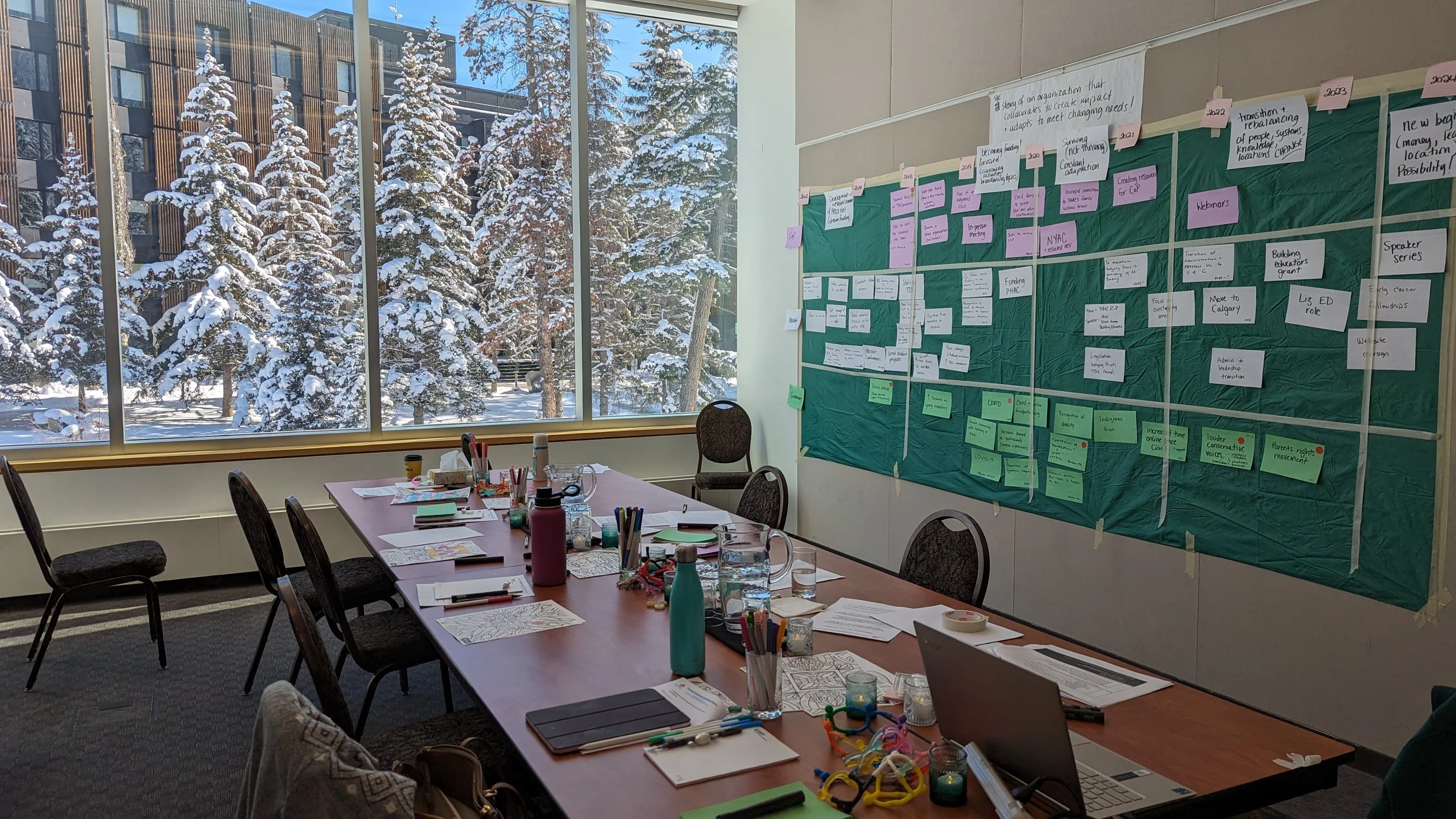
A well-designed retreat creates space for shared thinking, contribution, and clarity — away from the noise of day-to-day work.
The kinds of retreats we support
While every retreat is custom, much of our work falls into a few broad categories:
Board retreats focused on orientation, governance clarity, and strategic alignment
Strategic planning retreats that help organizations make meaningful choices about direction
Action planning retreats that turn strategy into momentum and implementation
Culture and team retreats that clarify purpose, values, and ways of working together
In the posts that follow in this series, we’ll go deeper into each of these – including what they’re best used for, common pitfalls, and what groups can expect to walk away with.
What you should expect to leave with
A Tilia retreat typically results in:
clearer priorities and decisions
shared understanding and language
increased confidence in the path forward
practical next steps with ownership and timelines
a group that feels more aligned and capable of working together
Just as importantly, people leave knowing why those decisions were made – which makes them far more likely to stick.
A final word on offsites
While many retreats take place offsite, the value isn’t simply in leaving the building. The real power of an offsite comes from creating a container that supports focused attention, honest conversation, and collective sense-making.
We’ll explore that more fully in a later post – including when an offsite is the right tool, and when it isn’t.
Planning a retreat?
If you’re considering a board retreat, strategic planning session, or team offsite this year, our first step is always a conversation about what you need to achieve – and how you want people to experience the process.
That’s where good retreat design begins.
Next in the series: Board retreats – orientation, alignment, and better governance conversations.